

What Perch Eat and Where they hold!

Greetings fellow Perch ADDICTS! Whether you are fishing for perch on Lake Erie, Lake Michigan, Lake St. Clair, Saginaw bay or another perch filled lake, we're glad you're here! This write up touches on some behavioral traits of these tasty fish! The more you know, the more you catch, typically! Get Addicted. Get Educated. Get Fish.
Yellow perch are schooling fish, and understanding how they behave is the fastest way to put more of them in the bucket. Unlike walleye and other predator fish, perch travel in large, tightly packed groups, which means that finding one often means finding dozens, and sometimes hundreds in a school. They relate heavily to bottom structure like rock piles, gravel humps, weed edges, and drop-offs near flats, using these areas both for cover and as feeding stations.
Forage drives everything perch do. They feed on small minnows like emerald shiners, along with insect larvae, nymphs, tiny crustaceans, and zooplankton drifting near the bottom or suspended just above it. Wherever that food concentrates, perch aren't far behind. This is also why perch schools shift depth and location with the seasons. They are often chasing comfortable water temperatures and the bait that comes with them. This movement can trick you! The spot that produced last month or even yesterday may not be holding fish today. Stay on the hunt. Find the food, find the perch!
This natural diet is exactly why the Perch Fly Rig from Fishing Addiction Gear works so well. Since perch spend so much of their time picking off small bugs, fleas, and other insects along with tiny minnows, a rig that mimics that same size and profile triggers strikes other setups can miss. The Perch Fly Rig's 2-hook dropper design lets you present two small baits at once. One that can imitate a natural insect or larva and another that mimics a small minnow, covering the exact food sources perch are already keyed in on. Because it also fishes two depths simultaneously, it helps you quickly figure out where in the water column that day's school is feeding, without constantly adjusting. When using a drop shot rig, you have to guess how much sinker lead to leave and hope it's in the zone. Our rig helps extend the "zone" with two flies covering a greater area of the water column. Sometimes a few inches above or below matters and doubling the odds can be very helpful!
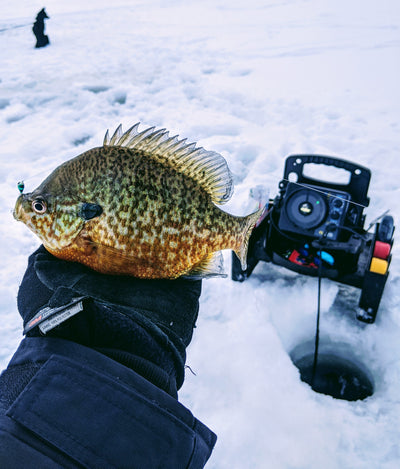
Understanding what perch eat and where they hold is the foundation of a good day on the water. Watch for bug hatches, diving birds and most importantly, your 2D sonar! Any changes in bottom structure, hardness or inconsistences often are a good starting point. Find the food, find the fish! Find just a few? Keep moving until you locate the heart of the school. If it's just a few stragglers, keep moving until you find the bigger schools and load up. Once you find them, drop your Perch Fly Rigs down to bottom, hold tight for a few seconds, slack line jig, then hold tight again. Rinse and repeat! Tip the Perch Fly Rigs with chunks of minnows, night crawlers or other live bait to increase the odds even more.
Good luck on the water fellow Perch ADDICTS!